
By Steve Heiting
For a musky fisherman, there is almost nothing better than success on Opening Day. Besides the excitement of the first fish of the year, a quick start indicates muskies have moved beyond their post-spawn funk and are ready to feed. The confidence that comes from early success can carry you through the entire season.
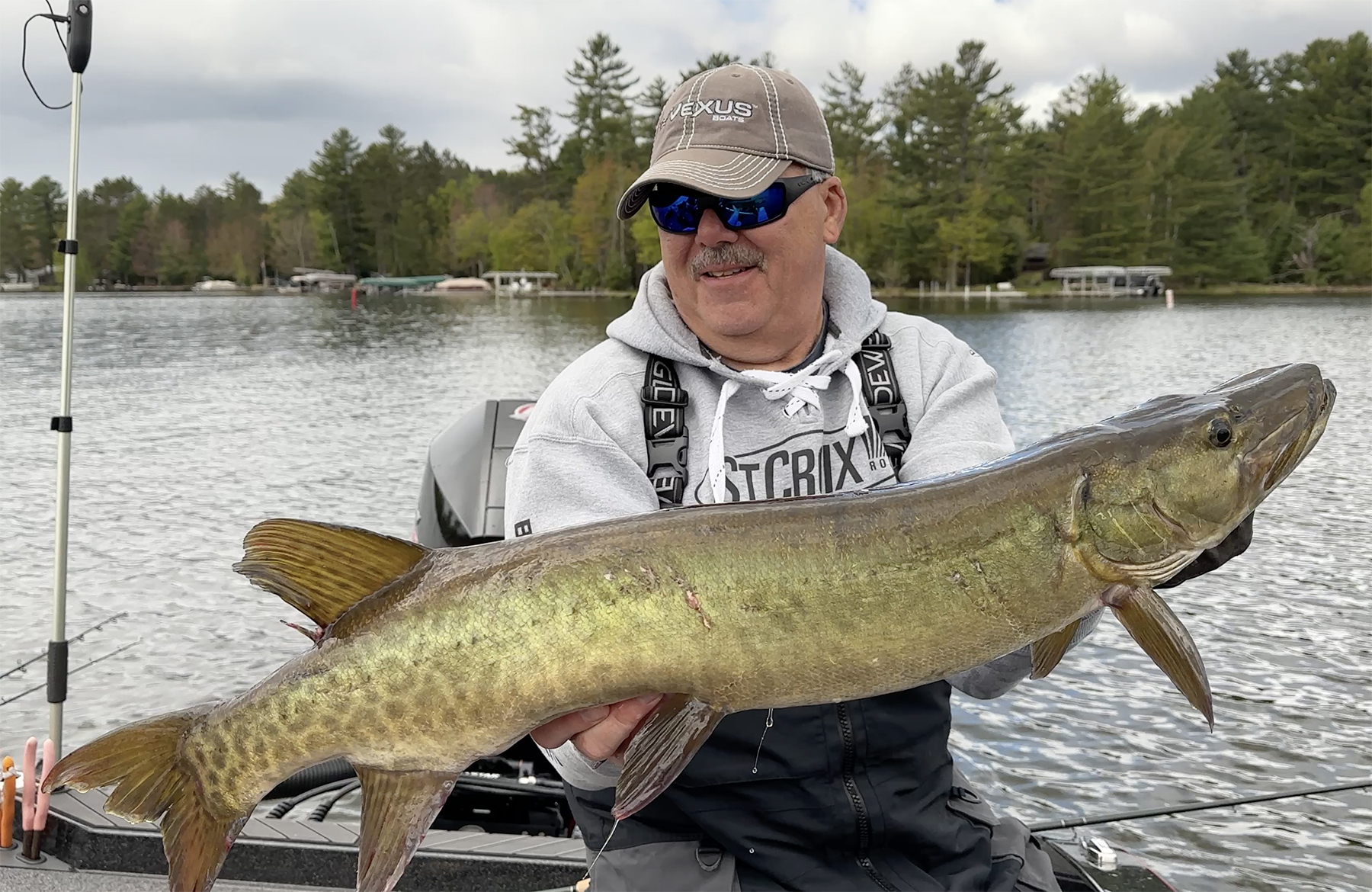
Arguably the two greatest factors to getting off to a fast start are an early or normal ice-out — which gets muskies into their spawning process sooner — and using the right presentations to trigger fish that probably aren’t ready to hunt down a big meal. Since we can’t do anything than cross our fingers in the hope of an early ice-out, it’s best to focus on the lures that will get the job done.
While my boat will always contains hundreds of musky baits, I could narrow my selection to only three lures and feel like I’m ready for almost anything when the season opens. As I ease my boat out from the dock to make my first casts, I will have three rods lying on the front casting deck, one rigged with each of these lure types. What are these special lures? The first is a small bucktail spinner, the second a 6- to 7-inch minnowbait, and the third a 7-inch dive-and-rise-style jerkbait. If you’re proud to be a cheesehead, you’ll be happy to know you can get all three from Wisconsin companies. Mepps, among many, make small bucktails; Bucher and Slammer, among others, make minnowbaits; and Suick Lure Manufacturing and others manufacture jerkbaits.
Since early season muskies are usually near their spawning areas, they’re going to be shallow. Even if they have moved out to the nearest available deep water, they’re probably suspended within a few feet of the surface. All three lure types discussed here are perfect for shallow-holding muskies.
If I had to pick one to start it would be the minnowbait, which is actually a crankbait but with flat sides. While you can occasionally catch muskies by simply casting such baits out and reeling them in, these lures are at their best when fished with a twitching action, which accentuates the flash produced by the wide sides. If you’ve ever twitched a Rapala for bass, this is exactly the same action to use only in a much larger scale. A twitched lure probably looks like a crippled baitfish or perhaps one that’s feeding. In either case, it represents an easy meal.
The minnowbait would be my first choice because post-spawn muskies often need to be triggered to bite. Twitching creates a lot of commotion and flash without much forward movement, which draws a lethargic muskie’s attention while providing ample opportunity for it to decide to attack. Since we probably launched our boat in the morning and the sun hasn’t had much time to warm the shallows, the muskies most likely aren’t ready to chase. That’s why I’ll chose a minnowbait first.
The dive-and-rise jerkbait also is a great pick at this time. Because it dives when pulled and floats up between pulls (or twitches), its forward movement is even less than that of a minnowbait. It’s a very subtle presentation because there is less flash than a minnowbait. Bumping the nose of the dive-and-rise jerkbait into weeds (regardless if they’re fresh and green, or still dead and brown from last year), wood or even bottom can sometimes trigger a musky when nothing else will.
As the day progresses, eventually the water will warm. Even a degree or two can greatly increase musky activity, so it’s important to watch the water temperature gauge on your electronics and target the warmest water. Muskies often become more aggressive when the shallows warm, and that’s the time to pick up the rod rigged with the small bucktail.
Even if you don’t reel them fast, a bucktail will let you cover more water than a minnowbait or jerkbait allows, so the likelihood of contacting an active musky goes up. Nobody can argue the effectiveness of a spinning blade for any fish species.
While it’s a general rule to wait for warming water before casting bucktails, if the fish aren’t responding to the start-and-stop of a minnowbait or jerkbait you have nothing to lose by trying a bucktail. In fact, this is precisely how my buddy John Stellflue and I once put together a nine-musky day despite air temperatures of 46 degrees and water temperatures of 56. I have no idea why they wanted bucktails that day, but I’m glad they did.
All three lure types mentioned here are best fished with a medium-heavy St. Croix baitcasting rod measuring around eight or 8 1/2 feet long, topped by a reel with a retrieve ratio of around 5:1. Thinner line has less wind resistance and drag, so spooling up with 50- or 65-pound test braided line will allow for longer casts with smaller lures.
A thin wire leader like Stealth Tackle’s Twitchbait Leader, is essential to prevent bite-offs. While the bucktail’s leader should have a ball bearing swivel to prevent line twist, your leader for minnowbaits and small jerkbaits does not because they don’t spin. Reducing leader weight by skipping the swivel will substantially improve the action of such minimally-buoyant lures.
If you cannot limit yourself to only three lures, try adding a jig-and-reaper and an 8-inch swimbait to your arsenal. The jig combo is great for catching muskies you see cruising. Just cast ahead and beyond so you don’t spook them, and then hop the bait back along the bottom by cranking the reel in bursts. Swimbaits have been especially deadly for me the last few years by casting them over deep water adjacent to spawning areas, and then reeling them fast just under the surface.
Summer will come soon enough, and with it the need to use bigger baits. But smaller lures are perfect to start your season with quick success.


